
Why Coproduction?
Notes on my personal practice

In his 1972 BBC series ‘Ways of Seeing’, John Berger uses the term “the means of reproduction” to problematise the authority given to pictures. He sought out to use it “…as though [it] offered a language. As if pictures were like words other than holy relics.”
Berger’s approach echoes Susan Sontag’s exclamation that ‘photography violates’. And Alice Massari’s subsequent conclusion that:
“If Sontag is right when she affirms that photography makes things represented worth being seen, we may be led to think that, on the contrary, what is not photographed is not worth seeing.”
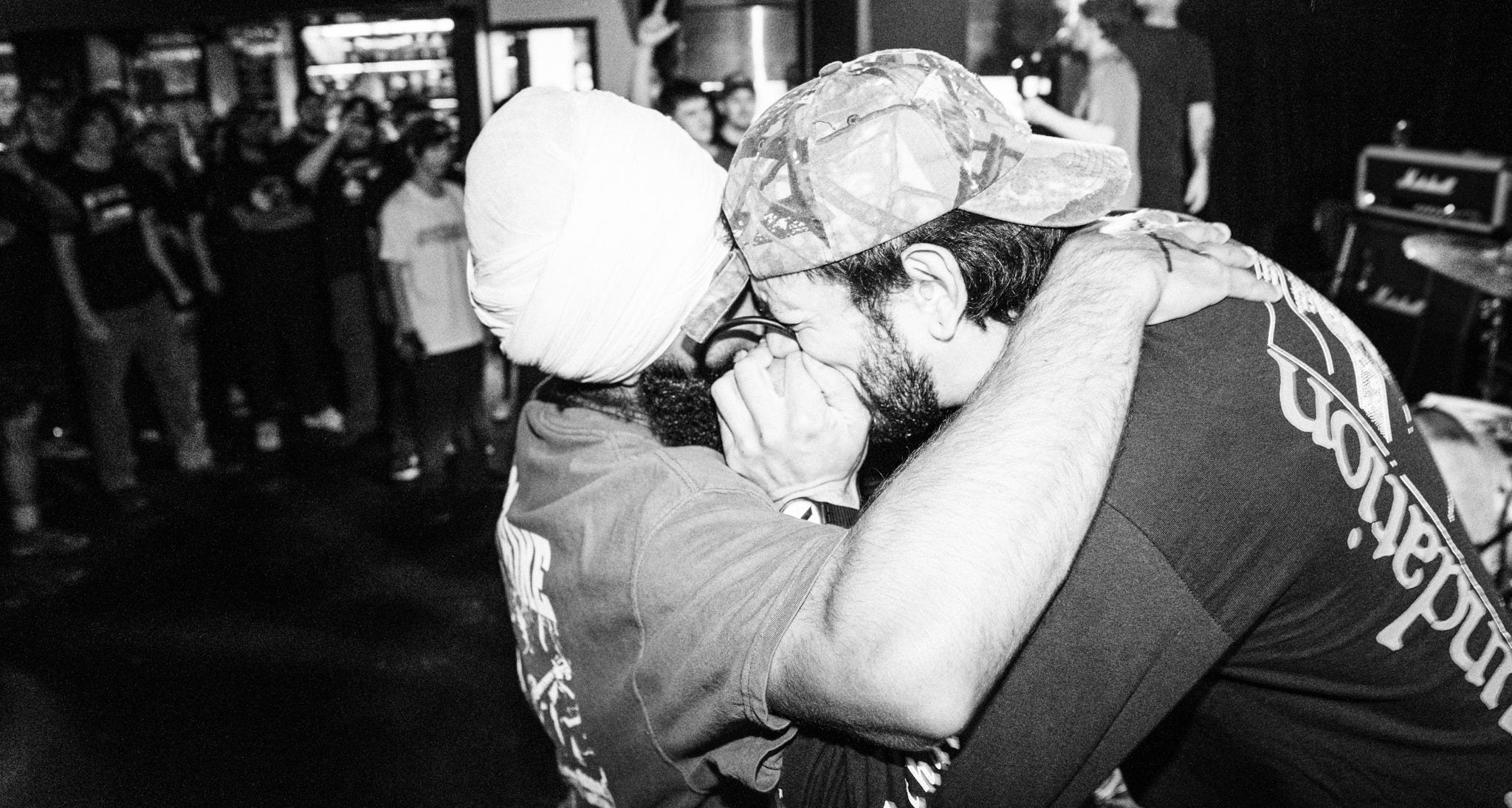
In a hyper-visual world these are the fundamental problems photographers face. We are seen (and sometimes think of ourselves) as a kind of journalist - documenting reality. I’ve taken photos of bands that no longer play, in venues that no longer exist. Within those images are faces of friends who no longer talk. Yet the pictures remain as proof; as testament to what was.
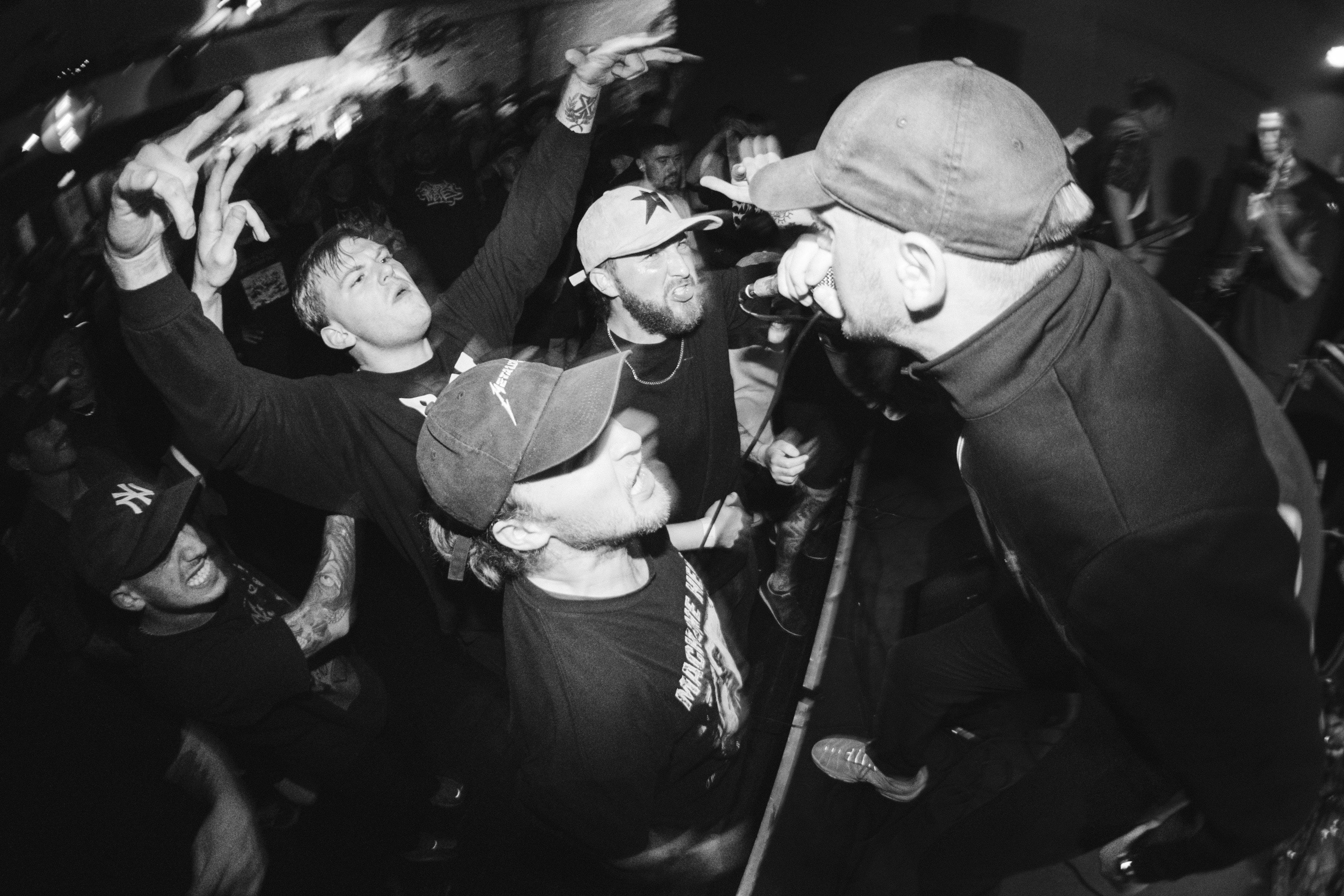
But Berger, Sontag, Massari and others throw this mindset in our face. Pictures are not ‘holy relics’. They are not authoritative documents. And I’m not a journalist.
My photography is not a reflection of reality, or some documentation of a ‘real’ event - they are digital reproductions of fractions of a second which have been composed, curated, edited, cropped, uploaded, downloaded, and rendered. In Massari’s words I am deciding who/what gets seen and who/what does not. The only thing outside of my control is the subject’s behaviour. The moshing, stage dives, pile-ons, posi jumps - all happen beyond my lens. Therefore, I am making something within a specific context, not documenting it. It would be impossible for me to be completely original if I tried - not just because of the established aesthetic norms of Hardcore, but also because the subjects (the band’s performance, the crowd’s dances etc.) are productions themselves. That is; I can only ever coproduce.
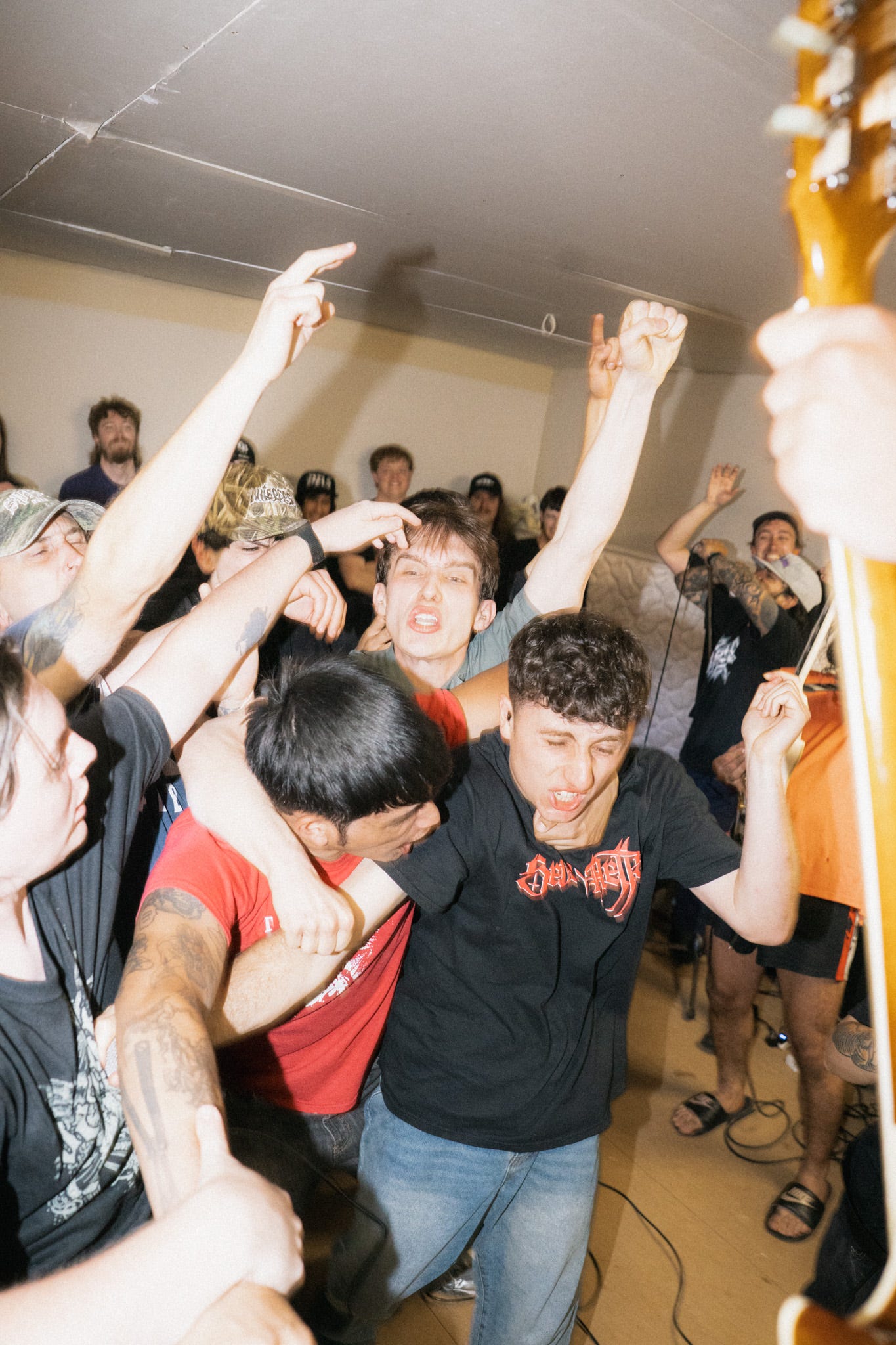
This fact is what shapes my practice, and determines how I try to photograph. Mainstream music photography is built on aesthetic principles which promote its ease of consumption. To capture the perfect composition, with impeccable exposure, minimal grain (unless you’re using expensive pro film), clear delineation of subjects, sharp focus, and a shallow depth of field to differentiate foreground from background.
Though I can appreciate the aesthetic outcomes; this is everything I try to avoid in my own work.
To me, there is something that mainstream music photography misses in its pursuit of aesthetic perfection. Many of the conversations I have with friends at Hardcore shows are centred around the ‘energy of the room’. The chaos, passion, camaraderie, connection which stems from the relationship between the performer and audience. Mainstream music photography turns its back on this by privileging the performer as the primary subject, sometimes including the audience almost as if an afterthought, or only to add emphasis to the quality of the performer that they were able to garner such a large crowd. This is a mistake. The ‘energy’ is relational, it doesn’t have one point of origin. It is situated between, not within.
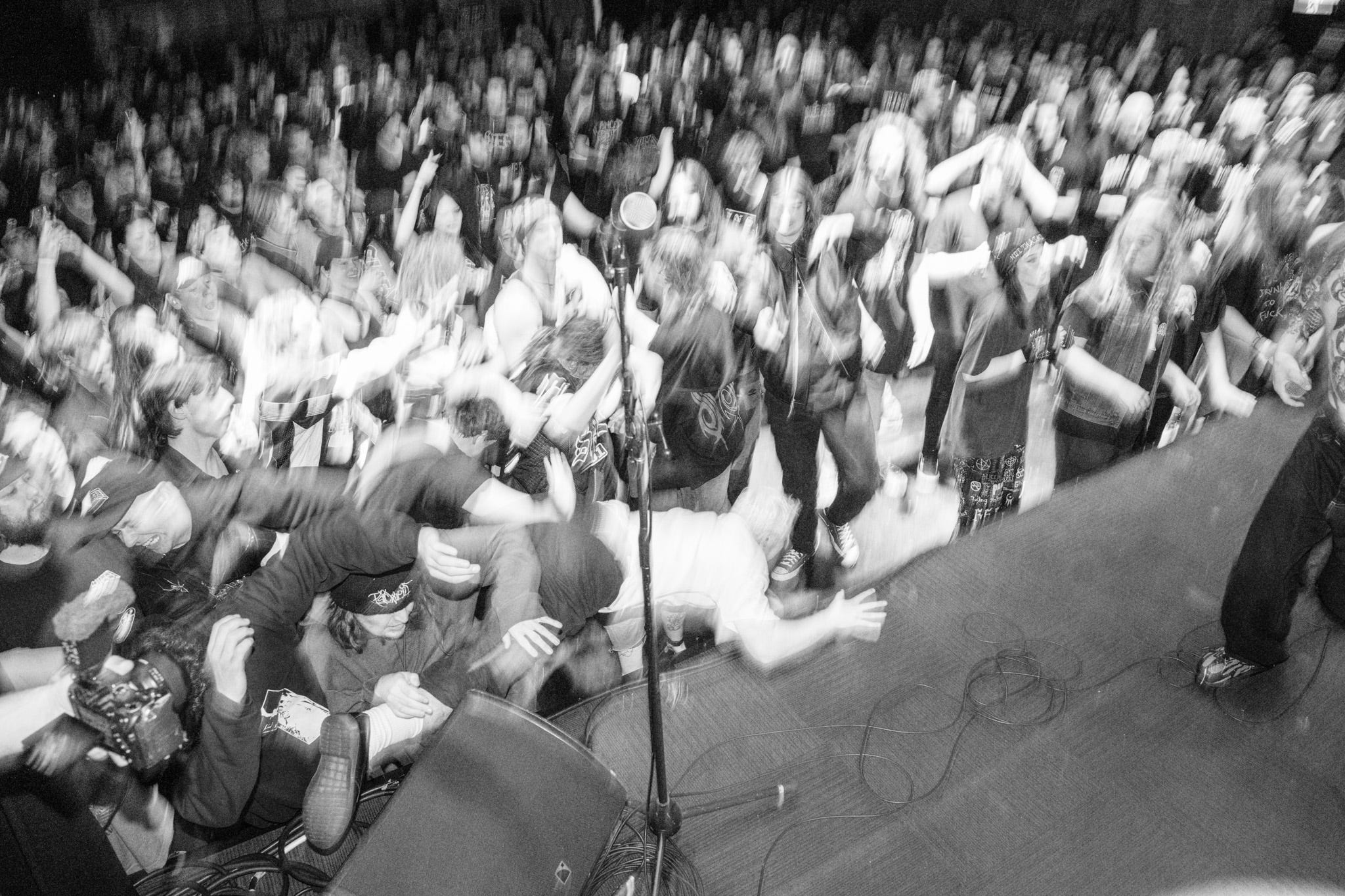
I don’t think that energy is unique to Hardcore, but it has its own specific flavour. Hardcore ethos in some ways resembles a defiance to ‘consumership’; the scene is a community in every sense of the word. Made up of active ‘citizens’, not passive consumers. I know that I could never fully ‘capture’ that energy or ethos in an image, I only try my best to engage with it.
There is an idiom used amongst American traditional tattooists to describe their work: “tattoos that look like tattoos.” This is how I think of music photography. I want it to feel photographic - not journalistic. Photos that look like photos reflect the inaccessible nature of the photograph, subverting the narrative that I’m akin to a journalist and, I hope, platforms the energising (and sometimes blurred) relationship between performer/audience.
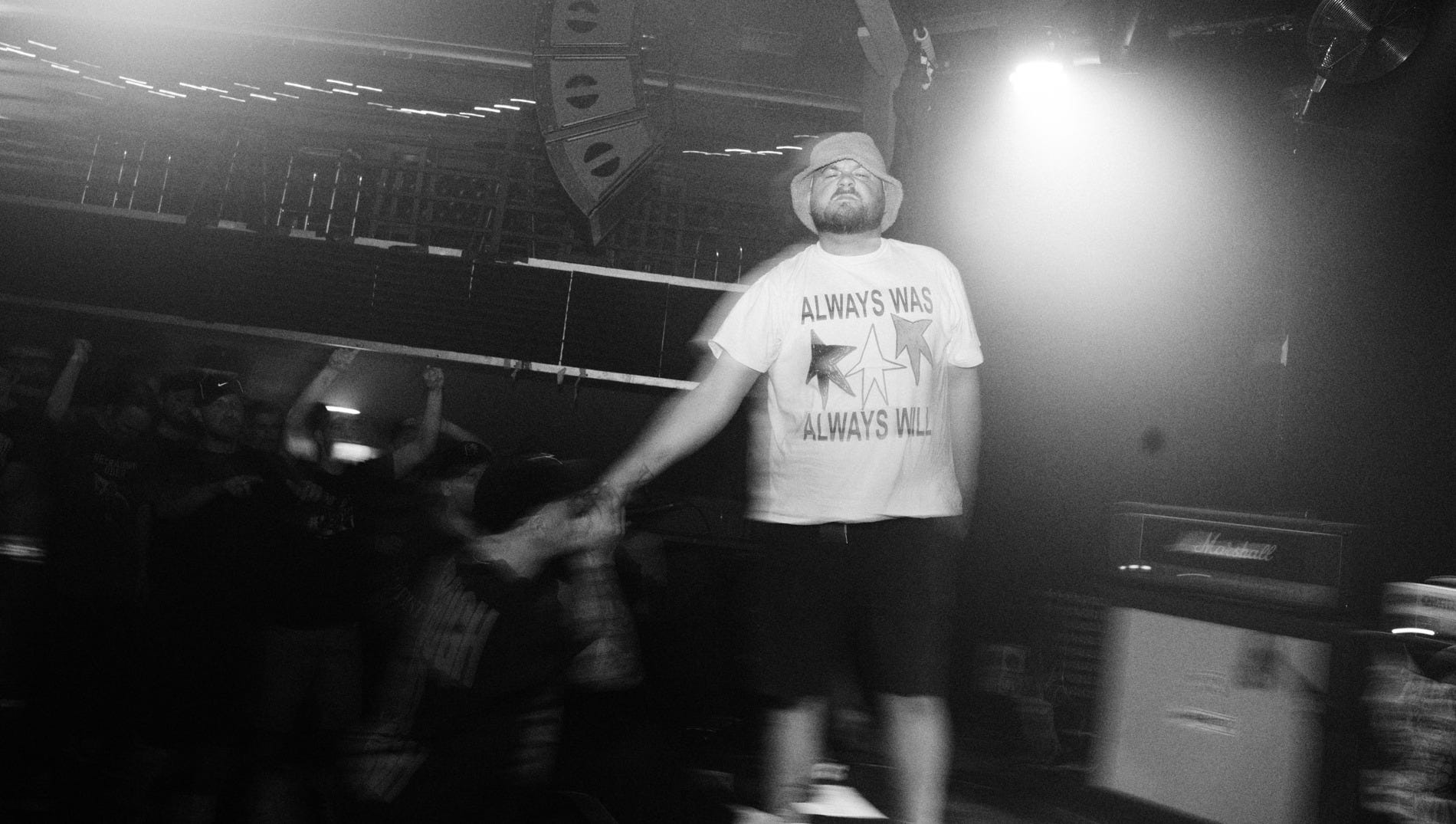
Berger seized the “means of reproduction”, an obvious word play on Marx’s “means of production”, to illustrate that images are a language for story-telling, thereby liberating it from the grasp of traditional and institutional modes of unquestionable ‘inherent’ meaning. This is how I seek to practice photography, but also through recognising the fact that I cannot independently produce, nor can I sufficiently reproduce.
I can only coproduce.
Great article Brodie! You presented an emotional aspect of photography I'd never considered before. As a layperson, I'd always considered photographs as simply a record of something that happened, a depiction of a moment in time. But your personal practice of Coproduction seems, in my opinion, to bring you closer to your subject... as connected... not just an objective observer.